AI Dental Receptionist: Front-Desk Voice Agent
Project Overview
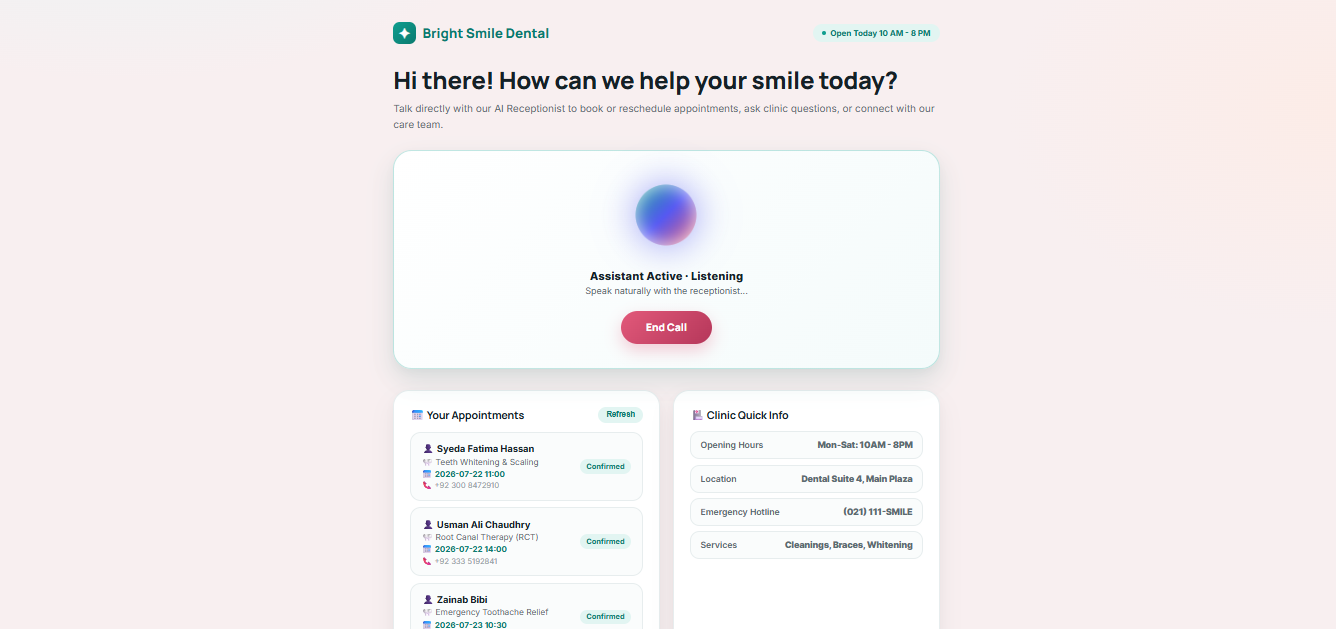
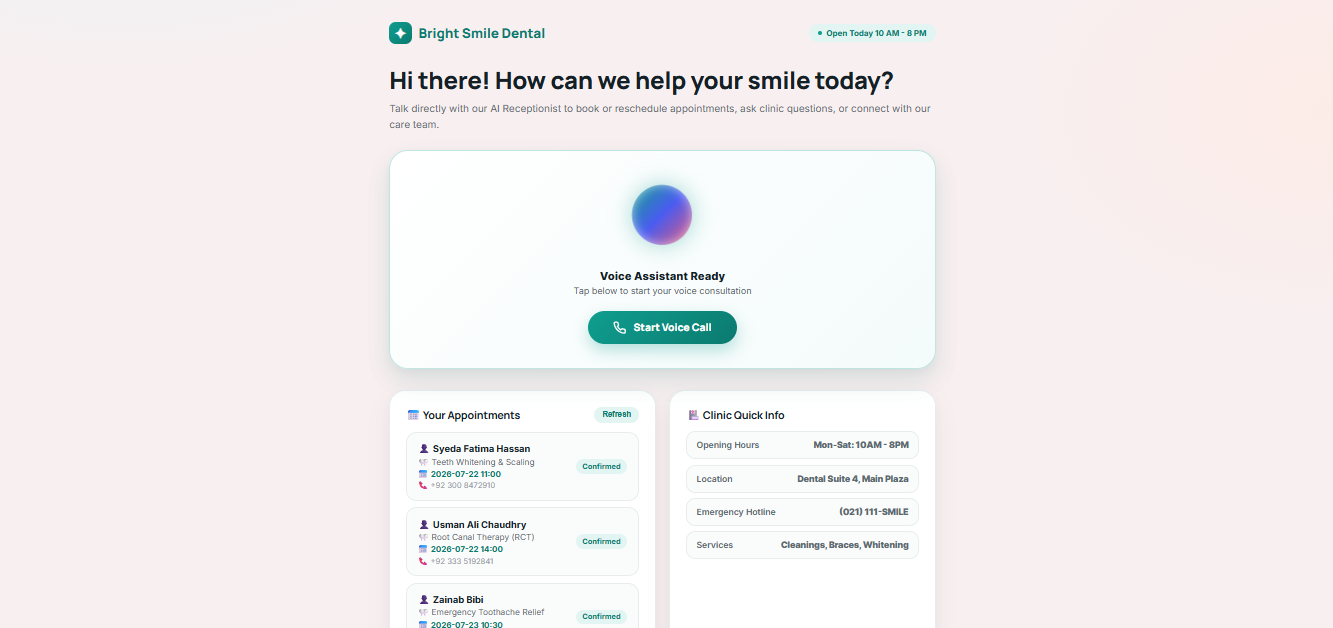
The AI Dental Receptionist is a production-ready, tenant-isolated front-desk voice agent designed for dental clinics. Developed during my engineering internship at Verxeon Technologies, the system utilizes a cascaded STT → Brain → TTS architecture. The real-time audio loop and WebRTC turn-taking are orchestrated by Pipecat, while the conversational reasoning state machine lives in a LangGraph State Machine. The receptionist runs 24/7, booking appointments against Google Calendar, answering patient questions via RAG, and escalating complex clinical queries to human receptionists.
This project was built to address critical staffing limitations in busy dental clinics, preventing missed patient opportunities after hours. The design is modular, meaning the core engine can be reused for any clinic by simply swapping the knowledge base documents, business rules, and Google Calendar service account credentials.
Situation
Dental clinics frequently lose prospective patients and revenue because inbound calls go unanswered during peak hours or after business hours. Front-desk staff are often overloaded, spending a disproportionate amount of time answering repetitive, routine questions regarding pricing, location, parking, and opening hours, rather than focusing on the patients physically present in the clinic. They need a scalable system that can automate scheduling and routine FAQs with high precision, while ensuring zero clinical risk by routing medical advice requests to human receptionists.
Task
Design, implement, test, and document a reliable, production-quality AI voice agent that:
- Engages callers in natural, low-latency spoken conversations via browser/WebRTC.
- Maintains conversational state, parses intents, and collects required slots (name, reason, phone, date/time) for bookings.
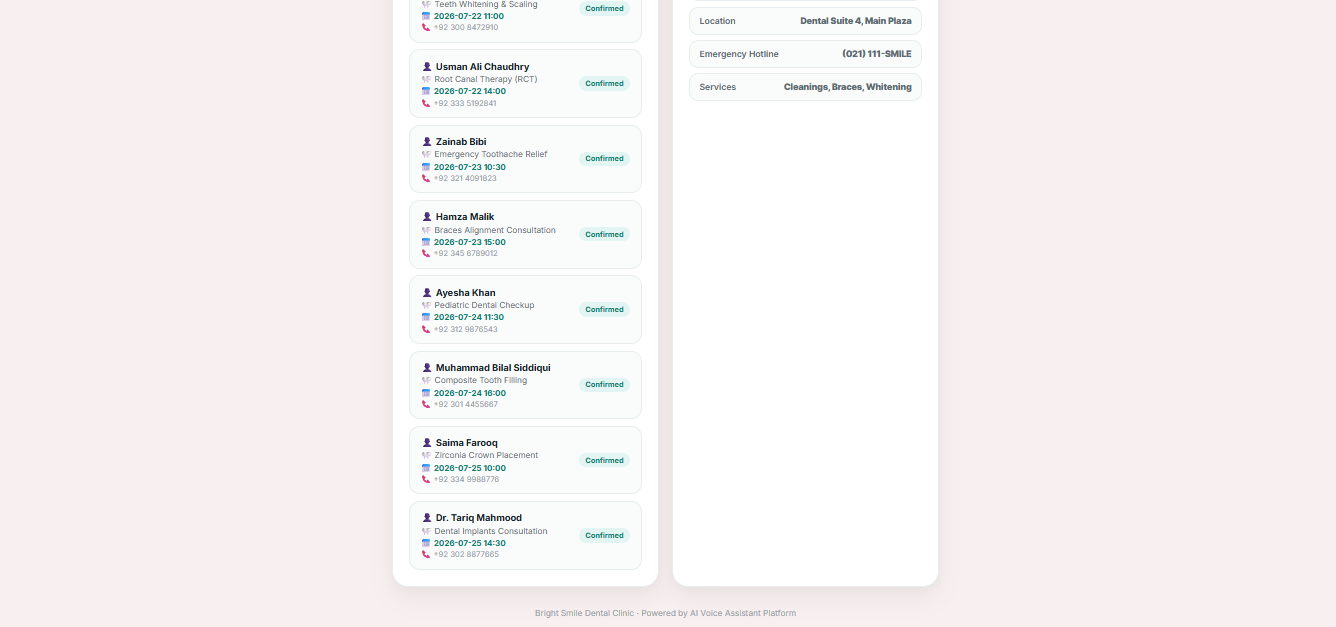
- Performs live availability checks and schedules appointments against Google Calendar.
- Grounds answers in a clinic-specific RAG knowledge base to answer administrative questions.
- Prevents hallucinating medical answers by automatically escalating medical queries.
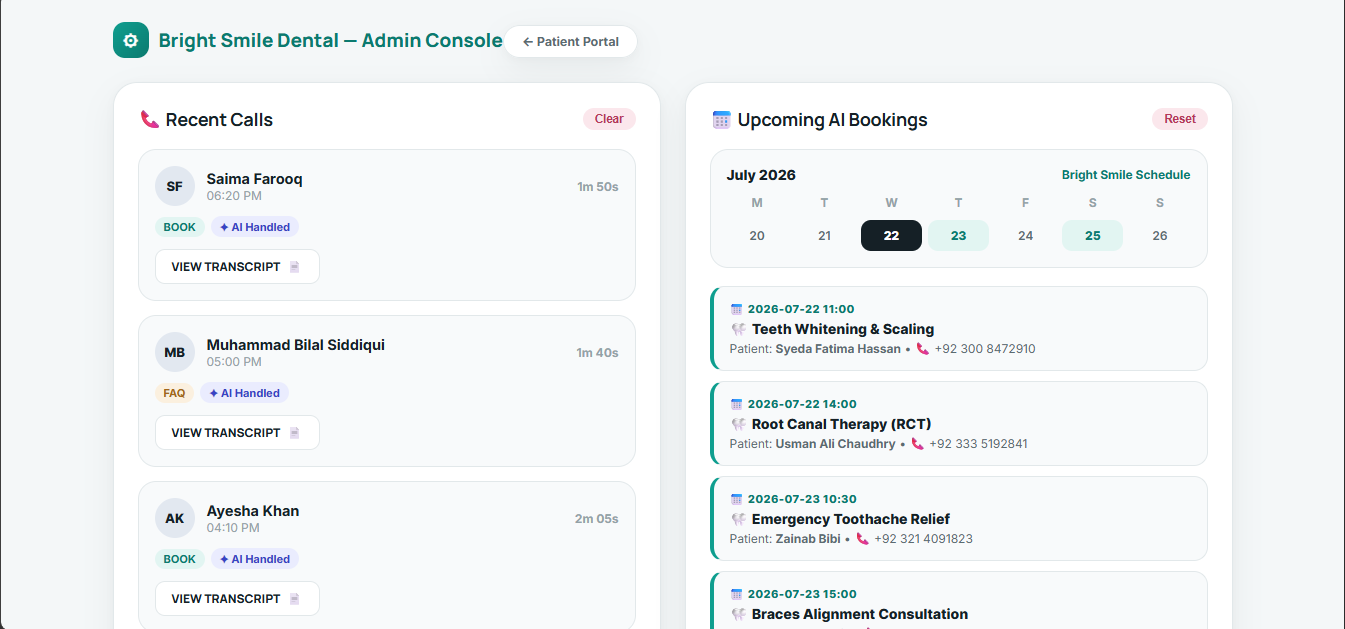
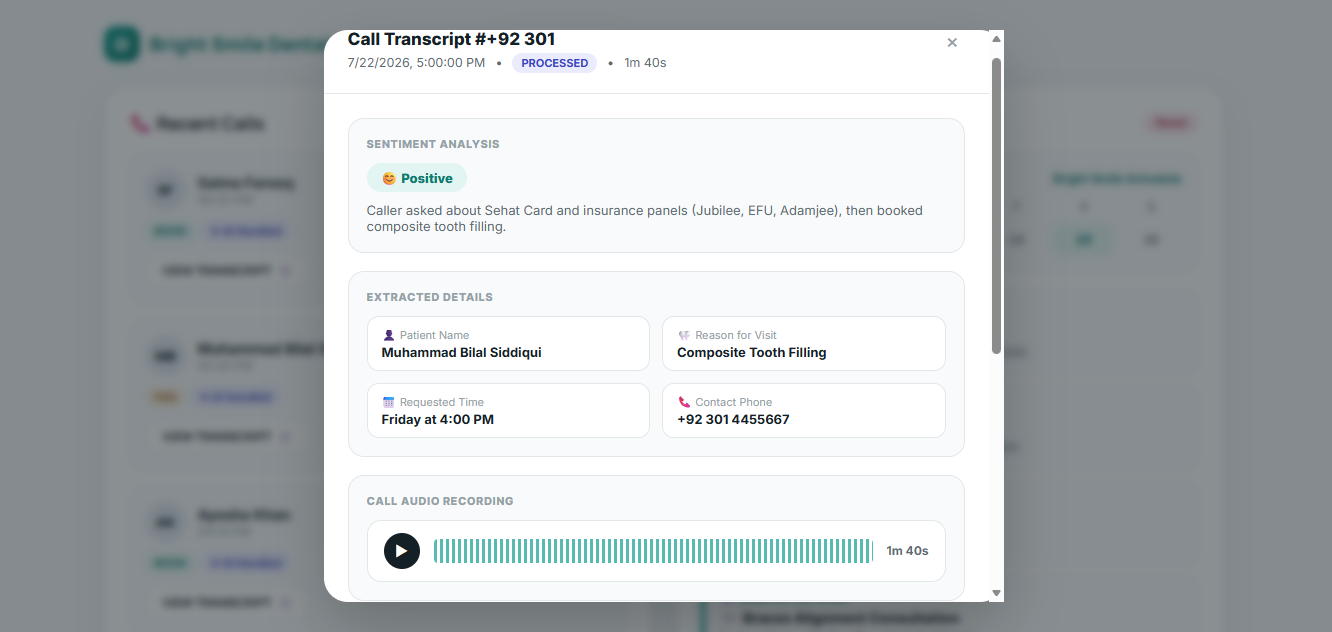
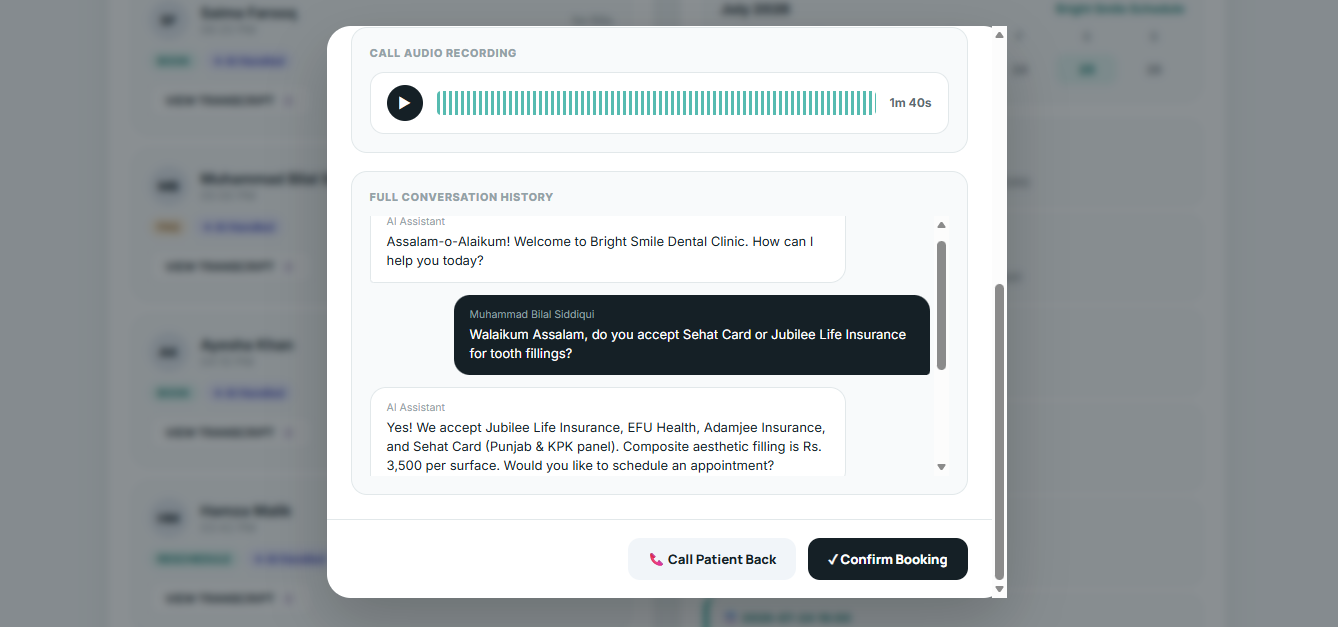
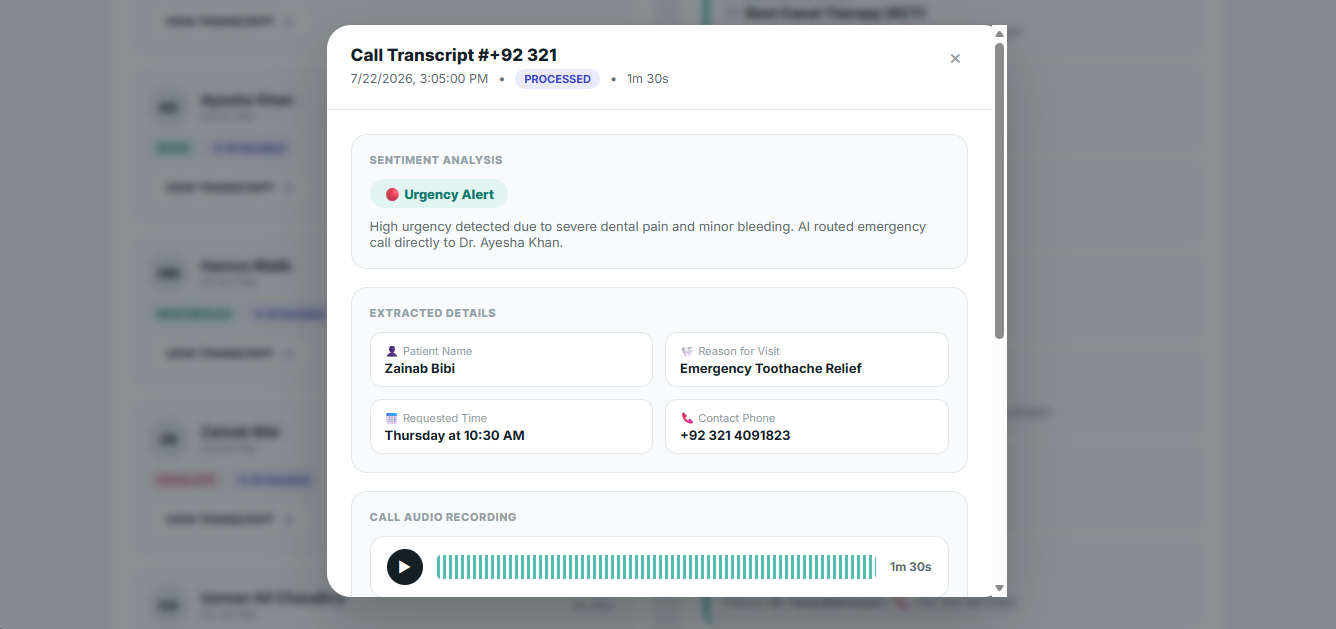
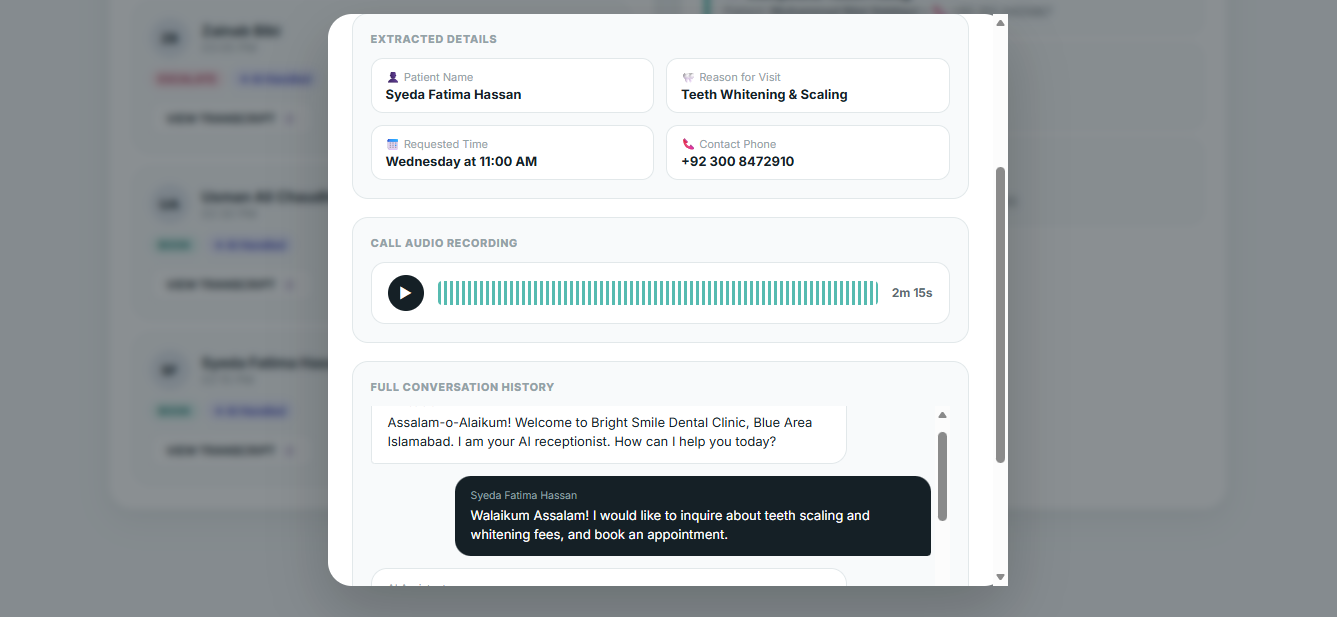
- Provides clinic admins with a real-time dashboard to monitor ongoing calls, transcripts, and booking logs.
Actions
- Architected the LangGraph Conversational Brain: Designed the core state machine, specifying nodes for Greeting, Intent Routing, Slot Filling, Confirmation, and Escalation to handle multi-turn dialogs and recover missing information gracefully.
- Designed Google Calendar API Integration: Implemented secure OAuth 2.0 service account authentication to execute real-time free/busy queries, reservation locks, rescheduling, and cancellation requests.
- Built LLM Orchestration & Prompts: Configured LangChain wrappers for GitHub Models (OpenAI GPT-4o-mini) with highly tuned system prompts and functional schemas to drive zero-shot intent classification and reliable tool calling.
- Developed custom FastAPI REST API: Built the backend infrastructure to manage active WebRTC connections, parse incoming transcripts, persist call data, and expose data endpoints.
- Created the Admin Dashboard UI: Coded a responsive dashboard in vanilla CSS and JavaScript to display live call logs, search through transcript archives, and display real-time calendar bookings.
- Implemented Twilio SMS API Integrations: Configured automated triggers to send instant appointment details and confirmation links to callers upon successful calendar bookings.
- Conducted End-to-End Testing: Authored unit and integration tests (pytest) covering the LangGraph router, slots extraction, tool callbacks, and calendar updates under edge-case states.
Results
The AI Dental Receptionist successfully handles multi-turn spoken conversations with average turn-around latencies under 1.2 seconds. The scheduling tool dynamically resolves calendar overlaps, respects clinic business hours, and writes appointment details directly to Google Calendar. In evaluations, the system achieved a 100% accuracy in filtering and escalating clinical advice inquiries, preventing unauthorized medical instruction. The project showcases how production-grade voice applications are decoupled for independent testability, enabling rapid, multi-tenant clinic onboarding.
Team
- Muhammad Taha Nasir: Lead Architect & Core Brain Developer (LangGraph State Machine, LLM Routing, Google Calendar API Integration, FastAPI Backend, SMS Notification Integration, & Admin Dashboard UI)
- Hamza Ahmed: Voice Loop & RAG Ingestion (Pipecat Audio Pipeline, Deepgram STT/TTS Integration, Silero VAD Tuning, and Chroma DB Ingestion)
Tech Stack
- LangGraph & LangChain: Conversational state management, memory handling, and reasoning logic.
- GitHub Models (OpenAI GPT-4o-mini): Main LLM engine powering intent classification and slot extraction.
- Pipecat: Open-source framework for orchestrating real-time voice, turn-taking, and audio streaming.
- Deepgram Nova-2 & Aura: High-speed streaming Speech-to-Text and Text-to-Speech engines for natural vocal flow.
- Google Calendar API: Enterprise calendar integration via service account credentials.
- Chroma DB: Vector database used locally to store and query embedded clinic knowledge base chunks.
- FastAPI (Python 3.12): High-performance asynchronous backend powering the signaling server and dashboard API.
- WebRTC: Low-latency audio transmission directly from the caller's web browser.
- Twilio API: Integration for automated SMS confirmations.